
Hair Mesotherapy: Evidence and Realistic Expectations
Content and links reviewed on 22 October 2026.
Hair mesotherapy involves injections into the scalp, but formulations and evidence vary. Establish the cause of hair loss before considering it, and ask how the proposed treatment compares with established options for that diagnosis.
What is hair mesotherapy?
Mesotherapy is a technique used to deliver selected substances into or close to the skin. Hair-loss protocols can differ widely in ingredients, concentration, depth, frequency and delivery method. This variation is one reason results from one clinic or study cannot be assumed to apply to every product.
What does the evidence show?
Systematic reviews have found encouraging results in some studies, but they also highlight small sample sizes, inconsistent treatment combinations and limited head-to-head comparisons. More controlled research is needed to determine which formulations and schedules are most useful and which patients benefit.
This means mesotherapy may be discussed as a supportive option, not described as a guaranteed cure or a universal replacement for established treatment.
Diagnosis comes before treatment
Hair loss can be caused by androgenetic alopecia, temporary shedding after illness or stress, iron or thyroid problems, scalp inflammation, medication, traction and autoimmune disease. Injecting the scalp without clarifying the cause can delay more appropriate care.
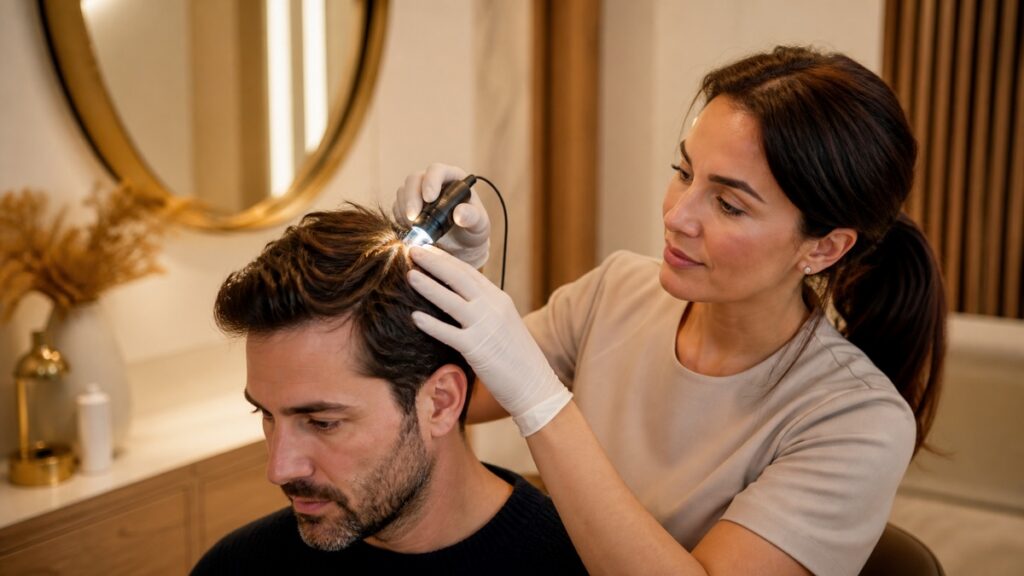
A consultation may include scalp examination, history, photographs and referral for medical assessment or laboratory testing when indicated. Shape Zoom’s advanced technology treatments should sit within that broader plan.
Who might be considered?
A clinician may discuss mesotherapy for selected adults with early or moderate pattern thinning, particularly when the scalp is healthy and expectations are realistic. It may be unsuitable during pregnancy, with active scalp infection, certain allergies, bleeding risks or medical conditions that need specialist management.
What happens during a session?
- The scalp and health history are reviewed.
- The treatment area is cleaned and mapped.
- The selected technique is applied according to the clinician’s protocol.
- Aftercare and the timing of the next review are explained.
Temporary tenderness, redness, pinpoint swelling or bruising may occur. Ask specifically about the ingredients being used, their regulatory status and the clinician’s experience.
When should results be reviewed?
Hair grows slowly, so assessment should be based on consistent photographs and a realistic review interval. Daily checking can be misleading. If shedding worsens, the scalp becomes inflamed or unexpected symptoms develop, contact the treating clinic.
Frequently asked questions
Is mesotherapy the same as PRP?
No. PRP uses a preparation derived from the patient’s own blood, while mesotherapy can involve different delivered substances or techniques. Evidence and risks should be discussed separately.
How many sessions are needed?
There is no single standard schedule. The recommended course depends on the diagnosis, product, technique and response. Be cautious of packages offered before assessment.
Can mesotherapy regrow a completely bald area?
It should not be promised. Areas with long-standing follicle loss are less likely to respond to non-surgical approaches and may require a different specialist opinion.
Can I combine it with other hair-loss treatments?
Sometimes, but combinations should be medically reviewed to avoid irritation, interactions or unnecessary treatment.
Bottom line: mesotherapy has emerging evidence for selected hair-loss patterns, but proper diagnosis, transparent product information and measured follow-up matter more than the treatment label.
Consultation and next steps
For an individual discussion, review our hair and scalp consultation. Shape Zoom Polyclinic is located in Al Safa 2, Dubai. Confirm the provider, suitability, treatment plan, full cost and follow-up before agreeing to a procedure.
This article provides general information and does not replace individual medical advice. Suitability, risks and results vary.