
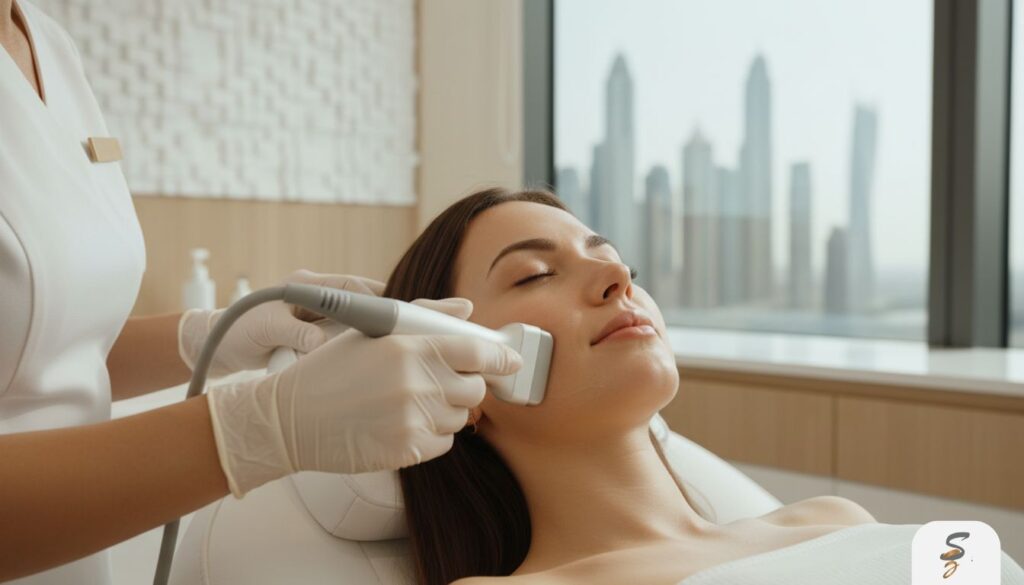
CFU vs HIFU: Comparing Ultrasound Skin Treatments
Content and links reviewed on 22 October 2026.
CFU and HIFU are terms used in marketing ultrasound skin treatments, but the exact device, indication and protocol matter. Compare evidence, suitability and risks rather than assuming that a newer label guarantees a better or more precise result.
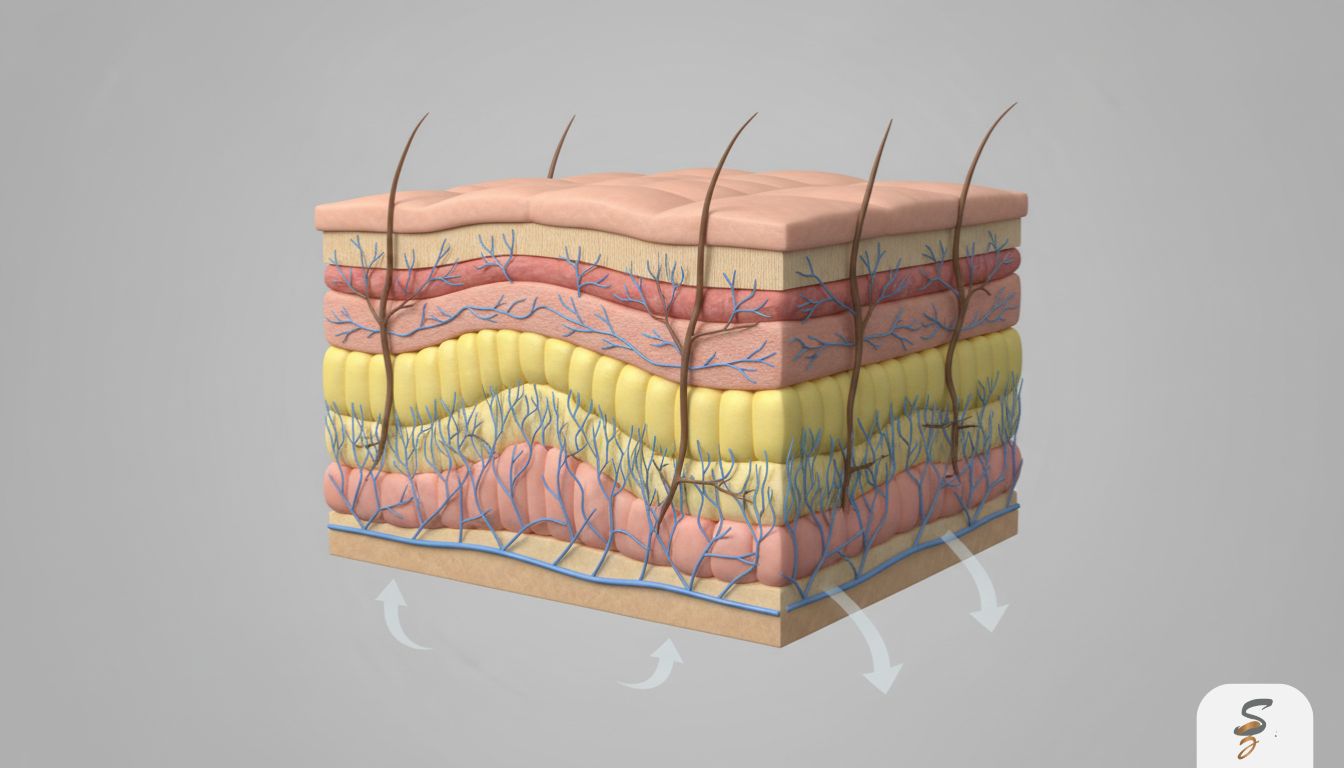
Why Skin Starts to Sag: A Simple Medical Explanation
Facial sagging is usually caused by a combination of:
- Collagen loss: Collagen and elastin naturally decline with age, making skin less firm.
- Changes in fat compartments: Facial fat pads can shift downward over time, softening cheek and jawline contours.
- Bone remodeling: Subtle changes in facial bone structure can reduce support.
- Sun exposure: UV radiation accelerates collagen breakdown—especially relevant in Dubai’s bright climate.
- Lifestyle factors: Stress, sleep disruption, and dehydration can affect skin quality and recovery.
Many patients want improvement without surgery. Ultrasound-based tightening focuses on controlled heating of deeper tissues to trigger a healing response and new collagen formation.
Key Medical Terms (in plain language)
Collagen neogenesis (your body producing new collagen after controlled stimulation) and
SMAS (a deeper supportive layer often addressed in surgical facelifts) are commonly discussed with ultrasound tightening treatments.
What Are HIFU and CFU?
HIFU (High-Intensity Focused Ultrasound)
HIFU uses focused ultrasound energy delivered at specific depths to create tiny thermal coagulation points (controlled heat zones). This process can stimulate collagen remodeling and tightening over time. HIFU is widely used globally for non-surgical facial lifting and is commonly offered in Dubai under regulated clinical settings.
CFU (Often referred to as “Circular Focused Ultrasound”)
CFU is an advanced ultrasound approach that also targets tissue at selected depths to stimulate collagen. Depending on the device and protocol, CFU may be designed to improve comfort, energy distribution, and treatment efficiency while still aiming for tightening and lifting effects.
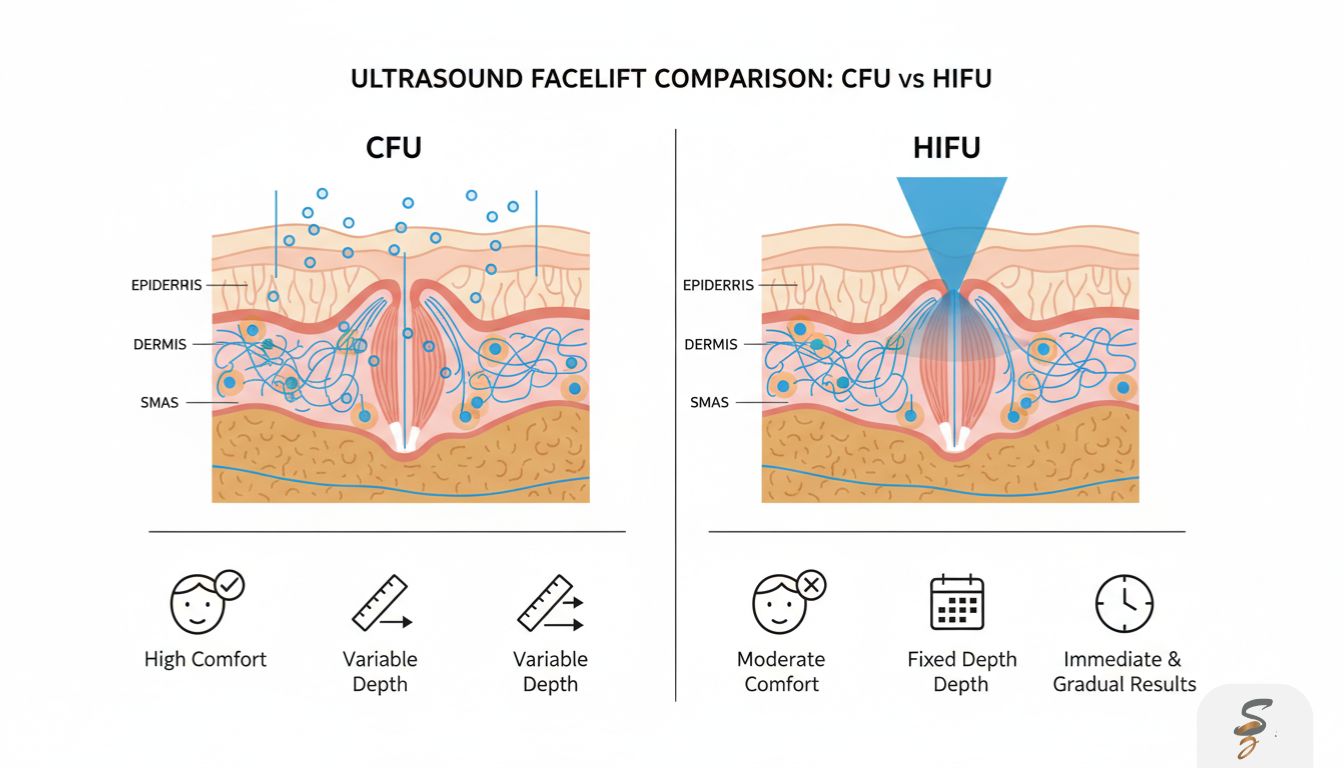
CFU vs HIFU: What’s the Difference for Patients?
Both treatments share a similar goal—collagen stimulation for tightening—but the patient experience and protocol may differ based on the specific technology, settings, and clinician technique.
| Feature | HIFU | CFU |
|---|---|---|
| Energy type | Focused ultrasound | Focused ultrasound (device-dependent delivery pattern) |
| Primary goal | Collagen stimulation and tightening | Collagen stimulation and tightening (often emphasizing comfort/efficiency) |
| Common areas | Jawline, cheeks, neck, brow area | Jawline, cheeks, neck (protocol-dependent) |
| Comfort | Can be uncomfortable for some patients | May be perceived as more comfortable (varies by patient/device) |
| Downtime | Typically minimal to none | Typically minimal to none |
Who Is a Good Candidate for a Non-Surgical Ultrasound Facelift?
In a Dubai clinic setting, many patients seeking an ultrasound-based non-surgical facelift are looking for subtle, natural-looking improvement rather than dramatic change. You may be a good candidate if you have:
- Mild to moderate skin laxity: Early jowls, soft jawline, mild neck looseness.
- Early signs of aging: Skin that feels less “springy,” mild drooping around cheeks.
- Busy schedule: Minimal downtime fits Dubai’s fast-paced lifestyle.
- Realistic expectations: Gradual tightening over weeks to months.
You may need alternative or combined treatments if you have significant laxity, very heavy jowls, or if your main concern is volume loss (which may respond better to other modalities). A consultation helps clarify whether ultrasound facelift protocols are appropriate for your facial structure and goals.
How the Procedure Works: What to Expect at ShapeZoom Polyclinic (Dubai)
1) Consultation and Assessment
Your clinician will assess skin laxity, facial anatomy, and medical history. This step is important for safety and results. In the UAE, reputable clinics follow healthcare standards and professional licensing requirements (including DHA-aligned clinical practices in Dubai).
2) Preparation
The skin is cleansed, and a coupling gel is applied. Some patients may use topical numbing depending on sensitivity and the chosen protocol.
3) Treatment Delivery
The device delivers ultrasound energy to targeted depths. Patients may feel warmth, tingling, or brief discomfort. Sensation varies by area (jawline can feel more sensitive than cheeks).
4) Aftercare
Most patients return to work or daily activities the same day—ideal for Dubai’s busy lifestyle and social calendar. Mild redness or tenderness can occur and typically resolves quickly.
Benefits and Expected Results (Realistic Outcomes)
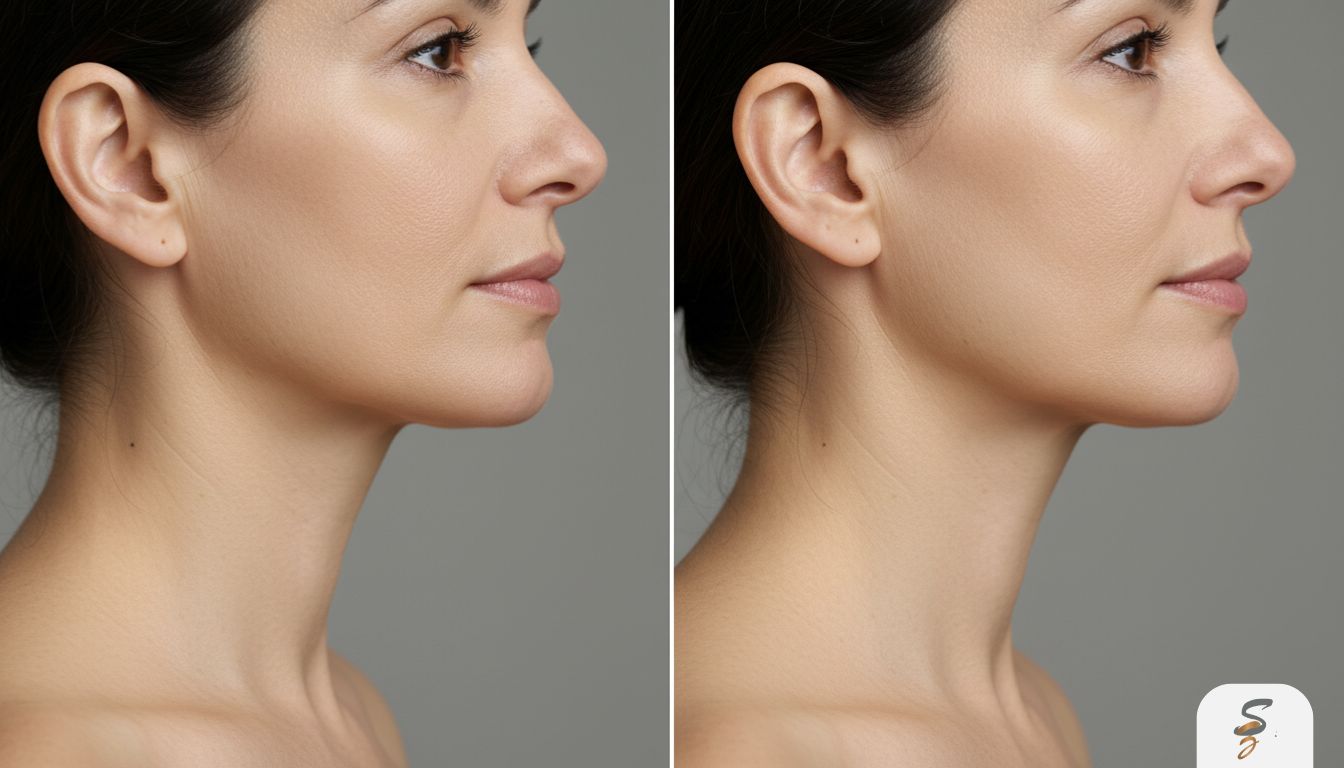
Both CFU and HIFU are designed to improve firmness gradually. Results are not instant like makeup or filters—think of it as encouraging your skin to rebuild support over time.
- Benefit: Gradual tightening of mild to moderate laxity (especially jawline and neck in many patients).
- Benefit: Improved facial definition (a more “snatched” look is possible for suitable candidates, without surgery).
- Benefit: Minimal downtime—often compatible with office schedules and travel.
- Benefit: Can complement other aesthetic plans (skin quality treatments, medical-grade skincare, or targeted nutrition support).
Many patients notice early changes within a few weeks, with continued improvement over 2–3 months as collagen remodeling progresses. Some patients may benefit from a series of sessions depending on the protocol and degree of laxity.
CFU Therapy in Dubai: Where It Fits in Your Plan
Patients searching for cfu therapy dubai often want a modern approach to tightening that aligns with a natural, refreshed appearance. CFU may be considered when:
- Comfort is a priority: Some patients report CFU protocols feel more tolerable (device and settings matter).
- You want gradual refinement: Particularly for early laxity and definition goals.
- You prefer a non-surgical path: With minimal disruption to work and family life.
If you want to explore whether CFU is suitable for you, our team can walk you through CFU therapy options, expected timelines, and how it compares with HIFU based on your skin assessment.
Cost in Dubai (AED): What Influences Pricing?
In Dubai, pricing for ultrasound tightening varies depending on the area treated, the number of lines/shots, the technology used, and whether the plan includes multiple sessions. A consultation is the best way to get an accurate quote.
| Treatment | Duration | Recovery | Typical Cost Range (AED) |
|---|---|---|---|
| Lower face/jawline ultrasound tightening | 30–60 minutes | Minimal to none | 1,500–4,500+ |
| Full face ultrasound tightening | 45–90 minutes | Minimal to none | 2,500–7,000+ |
| Face + neck ultrasound tightening | 60–120 minutes | Minimal to none | 3,500–9,000+ |
Pricing note: These are general ranges for Dubai and can vary widely. Your final cost depends on the treatment plan, technology, and clinical assessment.
Safety, Regulations, and Choosing a Qualified Provider in the UAE
Ultrasound tightening is generally considered safe when performed by trained professionals using appropriate protocols. In Dubai, choosing a reputable clinic matters because correct technique helps reduce risks and improves outcomes.
Potential side effects can include temporary redness, swelling, tenderness, or mild bruising. Rare risks may include burns, prolonged numbness, or uneven results—often linked to inappropriate settings or poor technique.
- Ask about clinician training: Experience with facial anatomy and ultrasound depth selection is essential.
- Expect a proper assessment: A good provider evaluates skin laxity, fat distribution, and medical history.
- Follow aftercare guidance: Especially sun protection—important in Dubai’s climate.
Frequently Asked Questions
Is this treatment safe?
When performed by trained professionals using appropriate protocols, ultrasound tightening is generally considered safe. In Dubai/UAE, it’s important to select a reputable clinic that follows recognized healthcare standards and uses proper patient screening. Side effects are usually temporary (redness, tenderness), but a consultation is essential to assess risks based on your medical history.
Which is better: CFU vs HIFU?
Neither is universally “better.” The best option depends on your degree of laxity, skin thickness, comfort tolerance, and the clinician’s assessment. Some patients prefer protocols associated with cfu therapy, while others do well with HIFU-based plans. A personalized evaluation is the most reliable way to choose.
How long do results last?
Results vary, but many patients maintain improvements for several months to over a year, depending on age, lifestyle, and baseline laxity. Collagen remodeling is gradual, and maintenance sessions may be recommended. Sun protection and healthy habits can help support longer-lasting outcomes—especially in Dubai’s sunny climate.
Is there downtime after an ultrasound facelift?
Does ultrasound tightening replace a surgical facelift?
No. Ultrasound tightening is a non-surgical approach designed for mild to moderate laxity and gradual improvement. Patients with significant sagging may be better candidates for surgical options. A specialist consultation can help you choose the safest and most effective route.
Can men do CFU or HIFU treatments?
Yes. Men in Dubai often seek jawline definition and neck tightening with minimal downtime. Treatment planning may differ due to skin thickness and facial hair patterns. A clinician will tailor the approach to your anatomy and goals.
What should I do before and after treatment?
Before treatment, avoid aggressive exfoliation or irritating skincare if advised by your clinician. After treatment, follow a gentle skincare routine, use sunscreen daily, and stay hydrated. If you have a special event during Dubai’s peak social season, plan ahead—results develop gradually over weeks to months.
Consultation and next steps
For an individual discussion, review our aesthetic treatment consultation. Shape Zoom Polyclinic is located in Al Safa 2, Dubai. Confirm the provider, suitability, treatment plan, full cost and follow-up before agreeing to a procedure.
This article provides general information and does not replace individual medical advice. Suitability, risks and results vary.