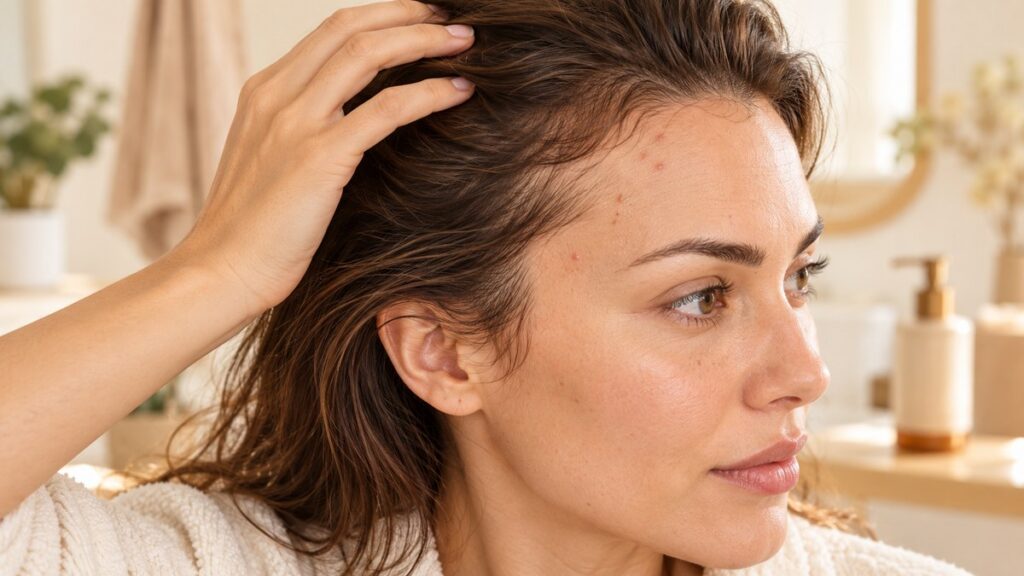
Can Hair Products Cause Hairline Acne? A Practical Guide
Content and links reviewed on 22 October 2026.
Hair products causing hairline acne are worth considering when small bumps keep appearing along your forehead, temples or the back of your neck. Oils and residue from products can come into contact with skin and contribute to clogged pores. That does not mean every hairline bump is acne or that your favourite conditioner is definitely responsible.
A practical review looks at where products touch, what changed before the bumps began and whether there are symptoms such as itching or pain. This guide helps you gather useful information and make a manageable routine review without blaming poor hygiene, stripping your skin or buying a long list of new treatments.
For an individual discussion, explore our acne assessment consultation.
Book a consultation on WhatsApp
Hair products causing hairline acne: how contact happens
Product does not have to be applied directly to the forehead to reach it. A leave-in conditioner, styling oil or pomade can transfer from hair onto nearby skin. Sweat, hats and a fringe resting on the face may make the contact harder to notice.
The American Academy of Dermatology describes product-related acne as acne cosmetica and notes that hair products can contribute to bumps along the hairline, forehead and neck. This is a useful possibility to discuss, not a way to diagnose every new breakout at home.
Think about the exact boundary of the affected area. Is it where a headband sits, where styling cream touches the temples, or where hair rests on the neck? A simple contact map can be more helpful than assuming your whole skincare routine is wrong.
Check what changed before the bumps appeared
List recent changes in shampoo, conditioner, styling products, hair masks and scalp oils. Include products used at a salon or after a new hairstyle. Note whether you also changed sunscreen, makeup, laundry products or exercise habits at the same time.
Bring ingredient labels or photographs of the containers to an assessment. Marketing terms such as nourishing or clean do not explain whether a product will suit your skin. Labels such as non-comedogenic or oil-free can help guide a discussion, although no label guarantees that every individual will tolerate a product.
If a prescribed scalp treatment is involved, ask its prescriber before stopping it. A cosmetic routine review should not interrupt treatment for a diagnosed condition without advice. Explain the location and timing of the bumps so a suitable adjustment can be considered.
Residue can be part of the pattern
Consider items that repeatedly touch both hair and skin: pillowcases, headbands, hats and a helmet lining. Routine cleaning can reduce product residue, but there is no need to scrub your face or sanitise your whole home in response to a breakout.
Keep hair products away from the face where practical and rinse carefully according to product instructions. If conditioner runs over the face or upper back, a gentle rinse may help remove remaining product. Avoid introducing several harsh cleansers as a preventive measure.
For someone commuting in Dubai and exercising after work, it may help to review when a cap or helmet is worn and how styling products are used beforehand. The goal is a realistic contact reduction, not giving up activities you enjoy.
| Clue to record | Possible relevance | Useful action |
|---|---|---|
| Bumps where styling product touches | Contact may contribute | Bring the product label |
| New product before symptoms | Timing may be useful | Record the introduction date |
| Itch, scale or a rash | May not be ordinary acne | Seek assessment |
| Painful lesions or scarring | Needs a treatment discussion | Arrange a professional review |
Not every bump is a clogged pore
Itchy, very uniform bumps, a scaly rash, tender spots or sudden widespread symptoms may have another explanation. Acne, irritation and other follicle or skin conditions can resemble one another. A clinician may need to examine the area to decide what is happening.
Do not automatically call worsening skin purging. A reaction to a hair product is not proof that the skin is clearing itself. If a product causes burning, swelling or an obvious rash, seek appropriate advice instead of repeatedly applying it to push through the reaction.
Painful deep lesions, scarring or persistent colour changes also deserve assessment. Trying to squeeze the bumps can make the situation harder to manage. Keep the description simple: where it began, what it feels like and what was being used at the time.
Review one plausible contributor at a time
When symptoms are mild and a non-prescribed cosmetic product is a plausible contributor, consider discussing a simpler routine with a clinician or pharmacist. Replacing every product at once makes it difficult to know what helped and can create further irritation.
Allow a sensible review period rather than judging a change after one wash. AAD patient guidance explains that product-related breakouts can take several weeks to clear after the contributing contact is removed. Ask for an individual review point if the diagnosis is uncertain.
Keep the rest of your skin care gentle and consistent. Do not add several acne ingredients to compensate for the suspected product. If an acne treatment is needed, it should be selected for your skin rather than layered onto an already uncomfortable area.
Preparing for an acne consultation
Bring clear photographs if the appearance fluctuates, plus the hair and skin product list. Mention medicines, allergies and other symptoms. Tell the clinician whether the area is itchy, painful or linked to a particular head covering or styling routine.
Ask whether the working diagnosis is acne or another condition, which contact changes are worth trying and when to return if the bumps persist. If an active treatment is recommended, ask how it fits with the rest of your routine and which side effects should prompt a call.
Shape Zoom Polyclinic in Al Safa 2, Dubai, can discuss acne concerns and treatment suitability. A useful consultation looks beyond a single product to the whole pattern. It should help you understand a manageable next step rather than make you feel that normal hair care is inherently a problem.
Book a consultation on WhatsApp
Frequently asked questions
Can conditioner cause bumps near the forehead?
Some hair products can contribute when residue contacts the skin. The product, pattern and symptoms need review rather than assuming all conditioners cause acne.
Does hairline acne mean my skin is dirty?
No. Product contact is not a judgment about hygiene. Harsh washing can irritate the skin without addressing the cause.
Should I stop every hair product?
A targeted review is usually more informative than changing everything together. Ask for advice if a prescribed scalp product is involved.
How quickly should the skin clear?
Improvement may take weeks rather than a few days. Persistent, painful, itchy or worsening bumps need reassessment instead of an indefinite home trial.
Can I squeeze the small bumps?
Avoid squeezing or picking. It can irritate the area and increase the chance of marks or scarring.
Related reading
Sources and further information
Consultation and next steps
For an individual discussion, review our hair and scalp consultation. Shape Zoom Polyclinic is located in Al Safa 2, Dubai. Confirm the provider, suitability, treatment plan, full cost and follow-up before agreeing to a procedure.
This article provides general information and does not replace individual medical advice. Suitability, risks and results vary. Cover image is an AI-generated editorial illustration, not a patient or treatment result.